

Learning the Quirks of Brass
I’ve been spending a lot of time with brass lately — learning how it behaves, how it reacts to heat, and how its quirks differ from silver and copper.
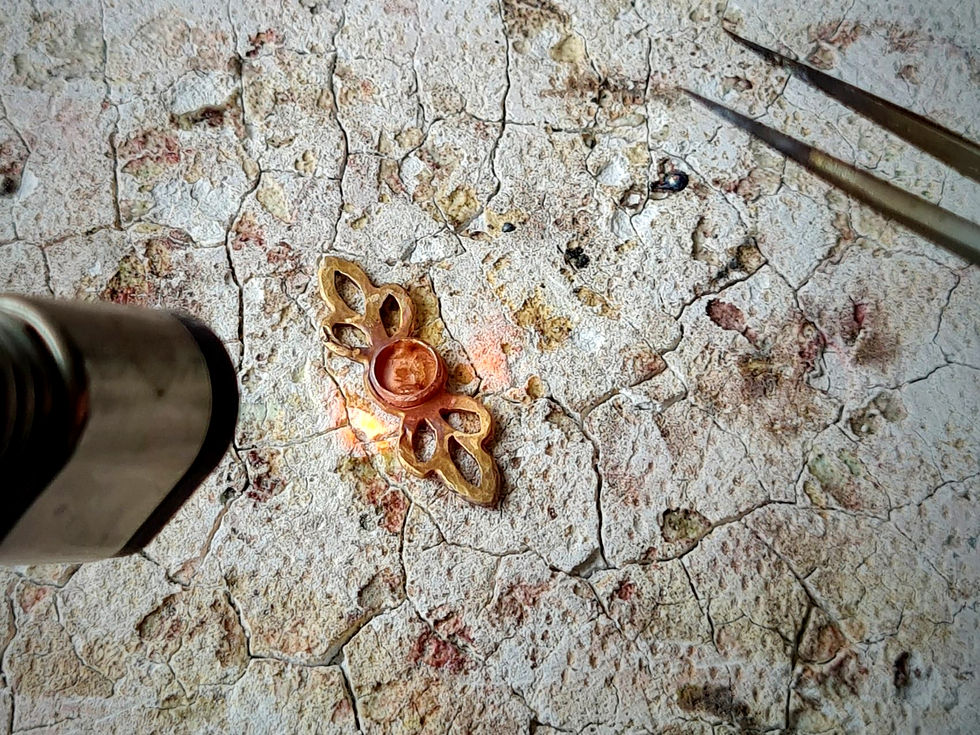
This piece started as a simple idea for a gemstone setting, but somewhere between the soldering and the shaping, it decided to teach me a few lessons. Brass takes longer to heat and needs a gentler, constantly moving flame — needing more time and patience. And sometimes, even when things don’t go quite to plan, that’s where the interesting part begins.


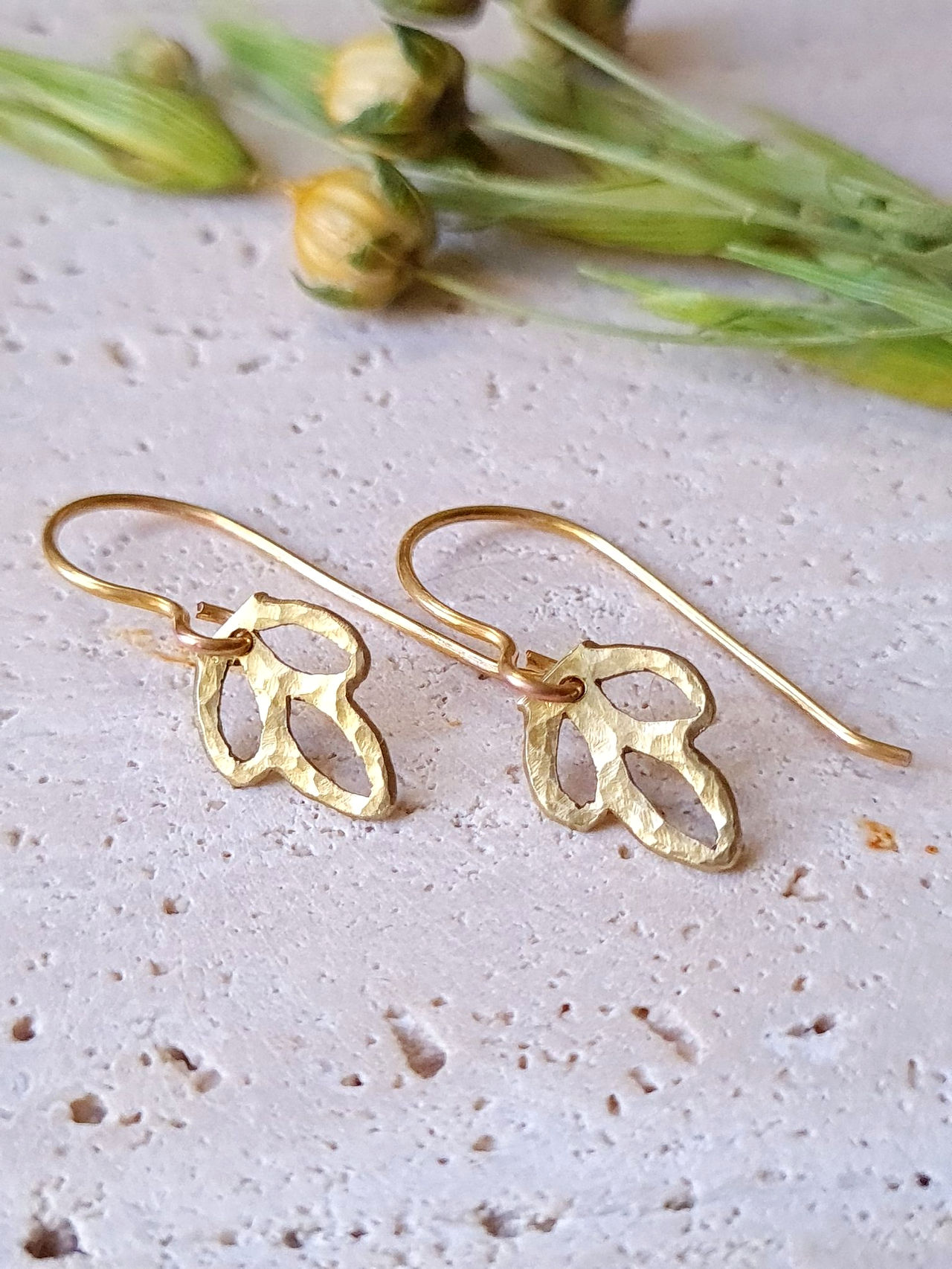
My first solder seam didn’t quite take. Brass takes longer to reach temperature, and the flux can burn away before the join is ready. The metal oxidised too quickly, damaging my bezel cup — but that mistake led to a new design. I isolated the leaf shapes and realised they had a quiet beauty of their own which led to their own stand-alone design.
I came back to the original design, beginning again with brass and solder — this time armed with what I’d learned, using a gentler flame and keeping the torch moving to maintain an even temperature. The join held — my first piece with a gemstone set in brass, and it feels like a small milestone — learning how this metal responds to heat, how it differs from copper. Both pieces belong to the same story: one shaped by adaptation, the other by persistence.

I like that soldering leaves a trace — a tiny silver seam that says, this was joined by hand. It’s a reminder that transformation takes both heat and patience, and that even the unexpected moments can lead somewhere new.
Both designs are now part of my collection — the Little Brass Leaf Earrings, shaped by adaptation, and the Pink Oyster Turquoise Leaf Earrings, shaped by persistence.


